
Food Allergy vs. Food Intolerance: What you need to know

Adverse reactions to food products containing certain ingredients are becoming more common, but these are more often caused by food intolerance and not food allergy. People often confuse these two types of food sensitivities because both can have similar signs and symptoms.
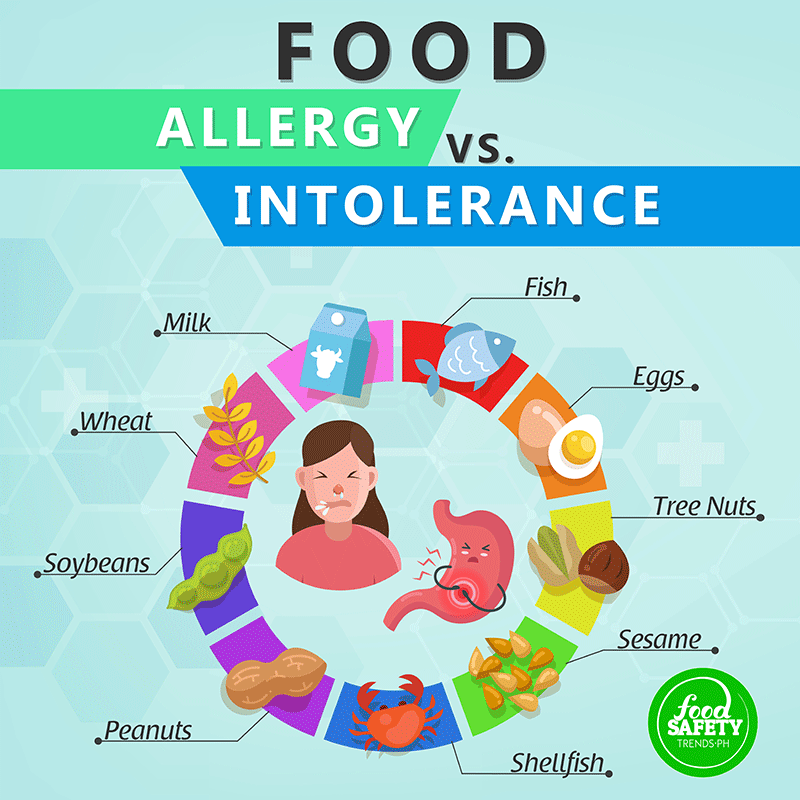
You may know at least one person who can’t enjoy enticing foods like pizza and lasagna, or even drinks like smoothies and milk teas without worrying because they are lactose intolerant. These mentioned foods contain lactose, a sugar found in milk and dairy products, that is one of the most common food components associated with food intolerance. Other types of food intolerance involve histamine, a naturally occurring chemical found in bananas, chocolates, and avocados; and gluten, a protein in wheat which can be found in bread.
Though the causative food may be similar, there are several characteristics that are distinct to each type of sensitivity. A true food allergy affects the immune system. Even small amounts can trigger various symptoms, which can even be life-threatening. Food intolerance affects only the digestive system and will most likely cause minor symptoms. These include abdominal pain, diarrhea, gas and bloating, headaches, heartburn, nausea, and upset stomach. Everybody is different and may not experience all the symptoms mentioned.
People with food intolerance have a hard time digesting or breaking down specific food components. However, they may eat small portions of these food without side effects or take preventive actions. For instance, people that are lactose intolerant may drink lactose-free milk or take lactase enzyme pills. On the other hand, keeping away from these foods completely is the only way for people with true food allergy to avoid experiencing any side effects.
Reference: U.S. Department of Health & Human Services, Office on Women’s Health
Photo sources: Freepik and Vecteezy

Glenwood Technologies International
Since its establishment in 1995, Glenwood Technologies International, Inc. has been the leader in exclusive distribution of premium rapid diagnostics and hygiene monitoring kits from trusted manufacturers worldwide, providing quality and technologically advanced products to meet the emerging needs for food and feed safety, among others.